Trigger warning: This article addresses various forms of sexual abuse, including rape.
The #MeToo movement has inspired lay and clergy members to begin to break the silence surrounding sexual harassment and abuse in and surrounding the church. It is very rare to hear a pastor or priest speak about sexual abuse – in the twelve years that I’ve been going to my church, I have heard my pastor address domestic abuse one time, and that as a side note.
Why is it that we give so little attention to this subject when a significant amount of the Bible is devoted to it?
2 Samuel 13

Amnon, the son of King David, was in love with his half-sister, Tamar. Following the advice of his adviser Jonadab, Amnon pretended to be ill and called on Tamar to care for him and feed him. When the two of them were left alone, he grabbed her and demanded that she sleep with him. She pleaded with him not to force her into sleeping with him, saying that she would be disgraced and he would be seen as a wicked fool. She even suggested they get married with the king’s permission. “But he refused to listen to her, and since he was stronger than she, he raped her” (v. 14). After the act was done, Amnon hated his sister and forced her to leave him. Tamar lived with her brother Absalom as a disgraced and desolate woman after this.
Judges 19

A Levite from Ephraim had a concubine who ran away from him and returned to her father’s house. Why she fled is not mentioned in the biblical text. The Levite traveled to where the concubine was staying and made her return to Ephraim with him. During their travels, they stopped to spend a night with a kind old man in Gibeah. Some of the “wicked men of the city” (v. 22) pounded on the door, demanding to have sex with the Levite. To protect himself, the Levite pushed his concubine out the front door, and the men of the city gang raped her and left her for dead.
John 8
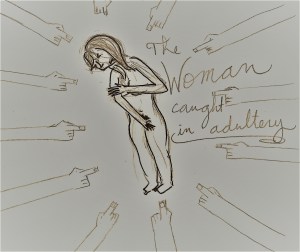
While Jesus is teaching in the temple courts, teachers of the law bring a woman who was caught in the act of adultery to Jesus saying, “In the Law Moses commanded us to stone such women. Now what do you say?” (v. 5). Jesus famously responds, “Let any one of you who is without sin be the first to throw a stone at her” (v. 7), and then tells the woman that he does not condemn her and encourages her to leave her life of sin.
Unlike these other passages, the story of the woman caught in adultery often gets preached in church. When I’ve heard it preached, the lesson is always about repentance. Jesus does not condemn us for our sins, but calls us to leave our sins. This is a good lesson, no doubt, but there is more happening in this story. I’ve heard it pointed out more than once that there was likely a man who was committing adultery with this woman, but he was not condemned. But I’ve never heard anyone point out the obvious sexual shaming that is going on here. Dragging this woman directly from the act of adultery she was caught in, likely naked or barely clothed, and publicly announcing what she had been involved in is sexual harassment. Why, when Jesus says “Let any one of you who is without sin be the first to throw a stone at her,” do we not recognize that they who are accusing this woman of sin are, in that very act, committing sin themselves?
These are only a few examples of the common theme of sexual abuse and harassment in the Bible. There’s also:
- Genesis 19, Sodom and Gomorrah
- Genesis 34, the rape of Dinah
- Numbers 25, Cozbi and Zimri
- Deuteronomy 22, marriage and rape laws
- Judges 21, murder and rape at Jabesh-Gilead
- 2 Samuel 11, David and Bathsheba
- Esther 1, Vashti shamed for not displaying her body
Each of these references, and the many more that I have not listed, have something unique to say on this subject. Rather than making an argument here about what these specific teachings are, I challenge all followers of Jesus to start taking a serious look at these passages and having conversations about abuse, assault, and harassment rather than continuing to ignore this very real, present, and serious subject.
 Neglected Word